


The Threat That Wasn’t: Real-World Self-Defense Starts With You
A lesson in navigating conflict, this morning at breakfast.
My daughter sat down across from me and, instead of saying anything, started texting.
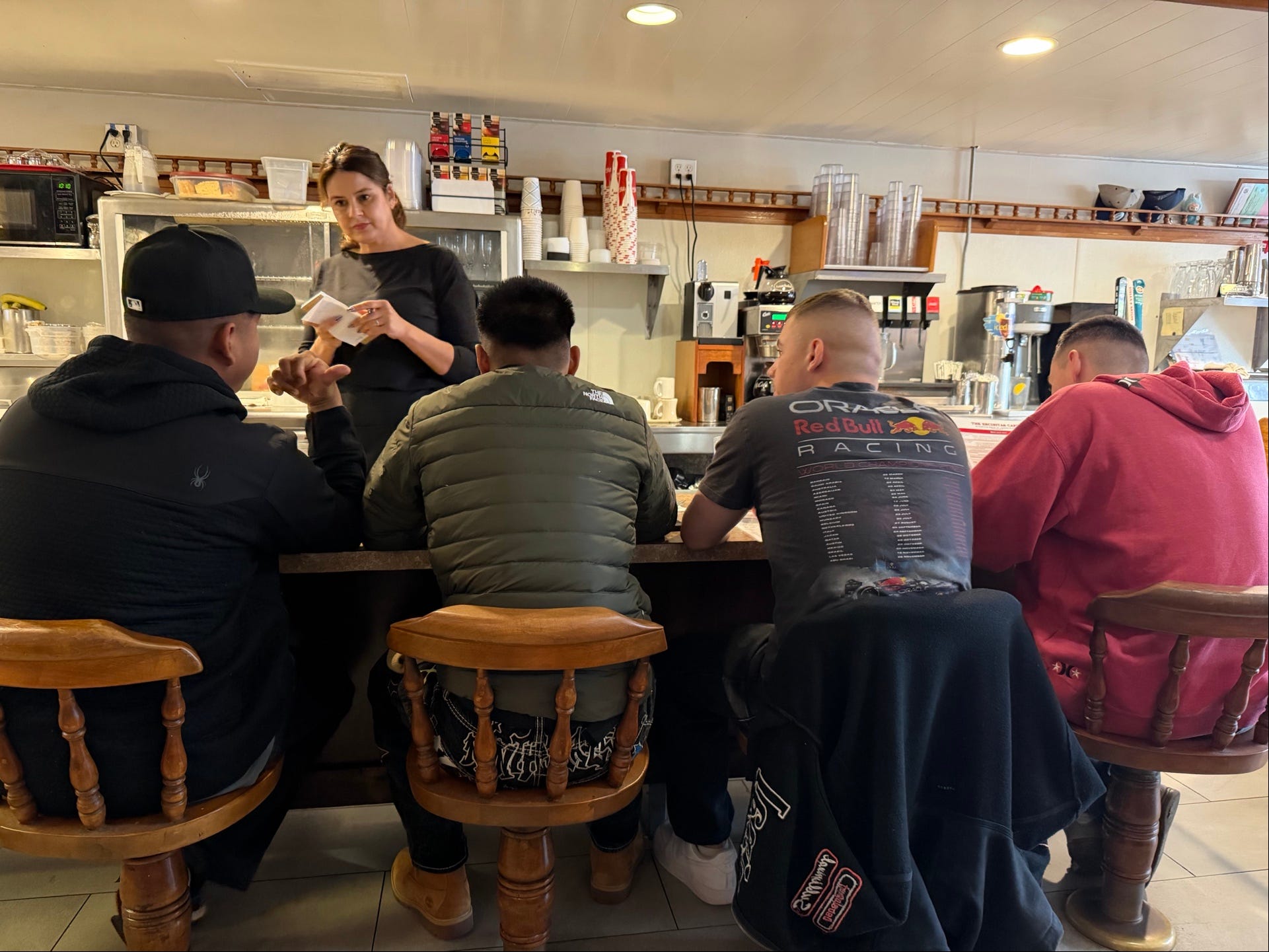
We were at a little café in town—the family had gone out for breakfast after my 8:30 meeting. She had just come from a Pilates class with my wife and was running a bit late. I could tell from her body language when she walked in that she was on edge.
The first lines were not something any father wants to read.
As I began reading, my body language completely shifted. I was sitting in a booth at the edge of the table. Before I even turned to look at the guys sitting at the counter adjacent to us—the ones who had followed my daughter in—I identified my knife and fork as immediate improvised weapons. The fear in her message was a spark, and it lit a fuse in me.
When I turned, I was expecting to see creepy, Manson-looking thugs printing weapons—traffickers, predators, I didn’t know. Instead, I saw four young men with distinct haircuts. But before I even extended my peripheral vision, I had already readied myself to go. This, mind you, is just two weeks after major spine surgery. Yet, I felt the muscles around my spine contract, coiling, getting ready to pivot and move.
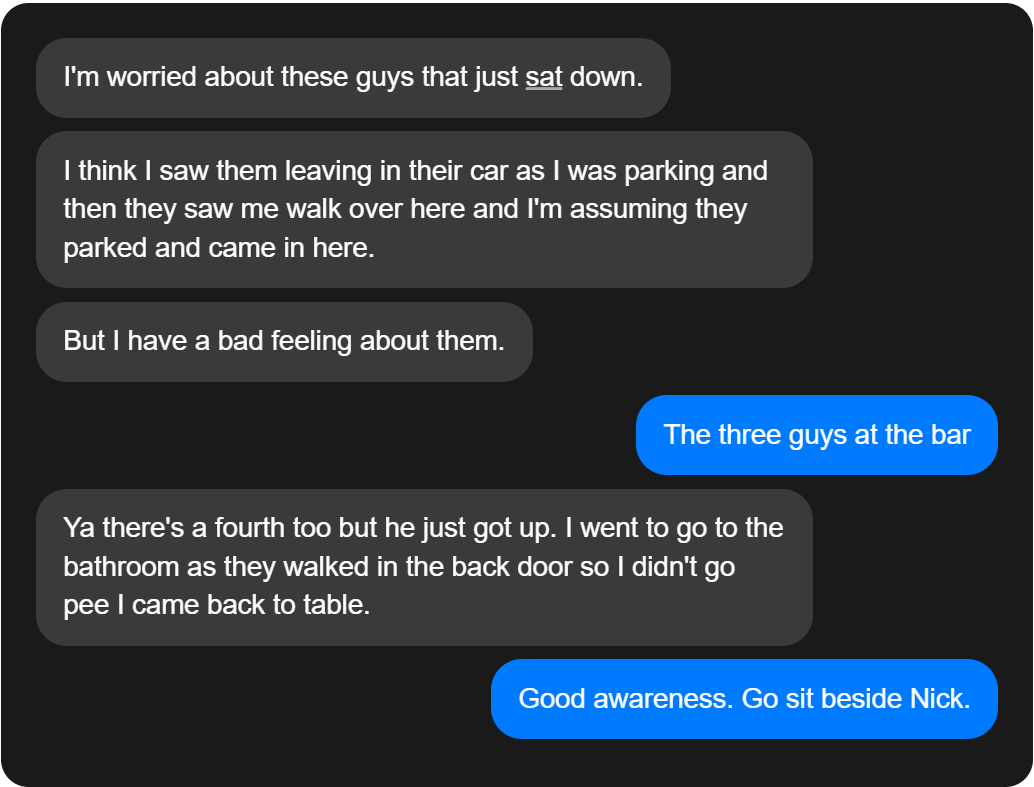
I looked over, studying their body language. One of them glanced over at my daughter. I started to study them more. They couldn’t see me; I was in their six o’clock blind spot. My daughter continued to text her nervousness. I noticed immediately they all had the same haircut. There’s a big Marine Corps base near us, so I thought, “Okay, these are all Marines.” That didn’t mean there wasn’t going to be a problem, but it was a data point.
Then the guy looked at my daughter again. My first instinct—that paternal, protective fire—was to get up, tap him on the shoulder, and say, “Hey buddy, you’re making my daughter nervous. Keep your eyes on your menu.”
But I stopped.
Part of de-escalation is the ability to defuse yourself. Even if these guys were drunk, high, or just assholes, escalating was the wrong move—especially with my family right there. There was no reason to escalate. Yet.
What I did next is a key component of our system and how we teach holistic self-defense: I defused myself before deciding whether I needed to defuse the potential threat.
This is the most important lesson: The advanced part of self-protection isn’t just about detecting, defusing, and defending against others. It’s about detecting your own emotions—your pride, your ego, your anger—and defusing yourself first.
I thought back to being 18 and single. My daughter is beautiful and in great shape. If a group of young guys saw her walk into a restaurant, of course they’d want to sit where they could see her. That’s not predatory—that’s human. The question isn’t whether they noticed her. The question is what they do next. I messaged my daughter that exact thing.
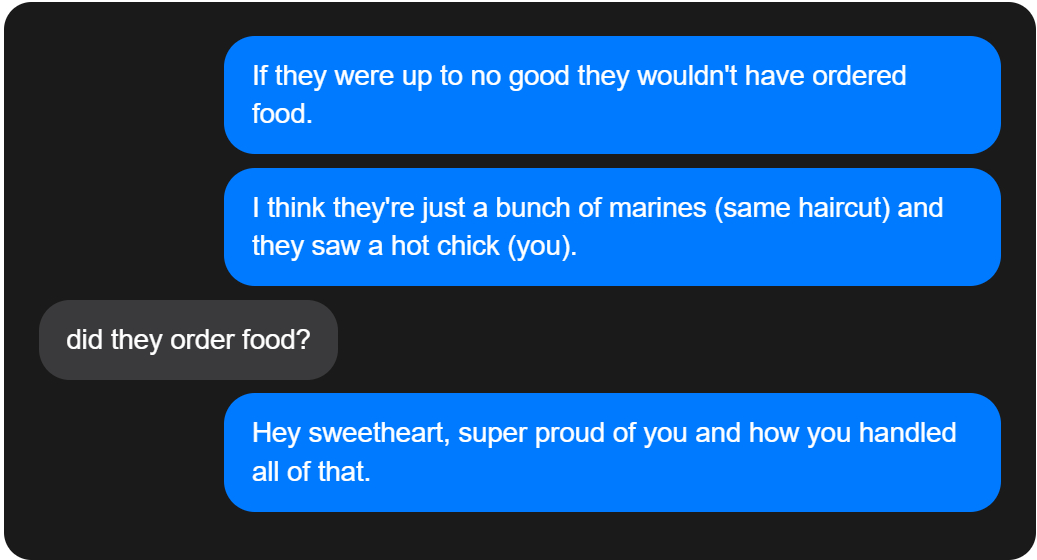
I decided not to say anything, but I still needed to verify. I got up and walked to the edge of the restaurant, pretending to do something, so I could get a clear look at their faces. I saw they were all young, really focused on each other and their phones. They had ordered breakfast; they were eating. At that point, I completely downgraded the situation. It was a non-threat.
I walked back over to my daughter and whispered in her ear, “I’m really proud of you. You did the right thing. But they’re totally cool. There was no danger here.” She still wasn’t comfortable and had lost her appetite—a normal reaction to an adrenaline dump—but she was safe. She had followed the “Choose Safety” model perfectly: treat it as a real threat until you can confirm it’s not. You’re still safe if you’re wrong.
I used my system to navigate the danger. I used it to defuse myself. And I used it to make sure my daughter understood how well she did. Had I thought for a second there was a real issue, my strategy would have been completely different. I would have alerted my family to get ready to move, and I would have controlled the timeline of violence myself.
This Isn’t Martial Arts.
This is Life.
The self-defense I teach is real-world self-defense. It’s not about katas or belts; it’s about learning how to think and navigate conflict and confrontation in real time. It’s about managing yourself as much as you manage a threat. This is what we cover in our Be Your Own Bodyguard® seminars, the Tactical Garage Gym, and what we master in BTS 90.
If you want to start thinking and acting like this—detecting threats, defusing yourself, and protecting the people you love—look into our BTS 90 program. This is your invitation to make a transformation you have to experience to believe.
Go to the page. Read the testimonials. Then ask yourself two questions:
If not me, then who? And if not now, then when?
👉[ Explore the BTS 90 Program ]
Situational awareness is essential.
I had come off the underground train in Kings Cross, Sydney, up the long escalators onto the main street pulling my luggage, turned left. I walked past cafes, strip clubs, games arcades, towards the side street that led to my apartment block.
I became aware that I was being followed. I stopped to look into a shop window - exotic undergarments but I wasn’t looking at them. In the reflection I saw a group of four young men - they had also stopped, looking at me, waiting. I didn’t eyeball them.
Instead of turning into my side street I went into a 7/11 - brightly lit, a young male shop assistant in a glass security booth, there would be a duress button under the counter.
I picked up a shopping basket and browsed the shelves, noticing that the group of men loitered outside. My shopping basket gathered a few items and I moved to the next aisle.
After some ten minutes the young shop assistant called out to me “It’s okay, you’re safe, they’ve gone now.”
He had seen exactly what I had felt.
Great recounting of a true-life incident. When one reads that approximately 1 in 5 women have experienced sexual assault in their lifetime, it is understandable that women are on edge. That is why when I enter the local parking garage, headed for my car, and their is a women in front of me, headed for her car, I slow down and create distance between us. While not necessary, it might have been helpful to approach the men and, in a friendly tone, let them know your daughter felt uncomfortable. Not because they did anyting wrong, but so they might be more aware of their (collective) impact on women in the future.